
It may shock you to learn that locks are used throughout the world. Ok, maybe not that shocking. But what does catch our customers off guard are lockset functions. And the widespread use of locks has resulted in creating different ways the lock behaves. This customization of the lock is referred to as a lock function.
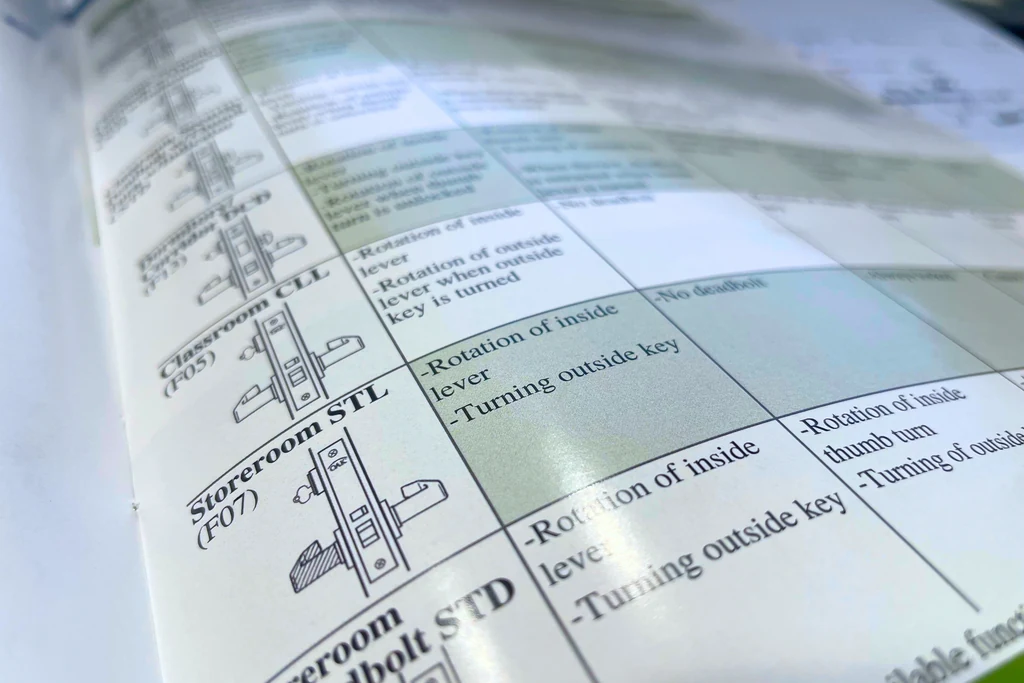
What Are Lockset Functions?
A lockset function refers to the specific mechanism and operational behavior of a door lock. The function dictates how it locks, unlocks, and operates from both sides of the door. While two locksets may look identical from the outside, their internal functions determine whether a key is required for entry, whether the inside lever is always unlocked for free egress, or whether turning a button locks the door temporarily or continuously.
How Lockset Functions Control Access and Privacy
Lockset functions are primarily designed to balance security, convenience, and life safety. By defining how latchbolts, deadbolts, key cylinders, and push/turn buttons interact, each function establishes a specific level of control over who can enter or leave a space:
- Access Control: Determines whether a door remains accessible to the public, requires a key or key card, or stays locked from the outside at all times (such as in storerooms or secure offices).
- Privacy: Allows occupants to temporarily prevent entry from the outside, typically using a turn-button or push-button on the interior lever (common in restrooms and bedrooms), while maintaining simple emergency unlock capabilities from the exterior.
- Egress Safety: Ensures that occupants inside a building or room can exit quickly without needing a key or special knowledge, meeting fire and building safety code standards.
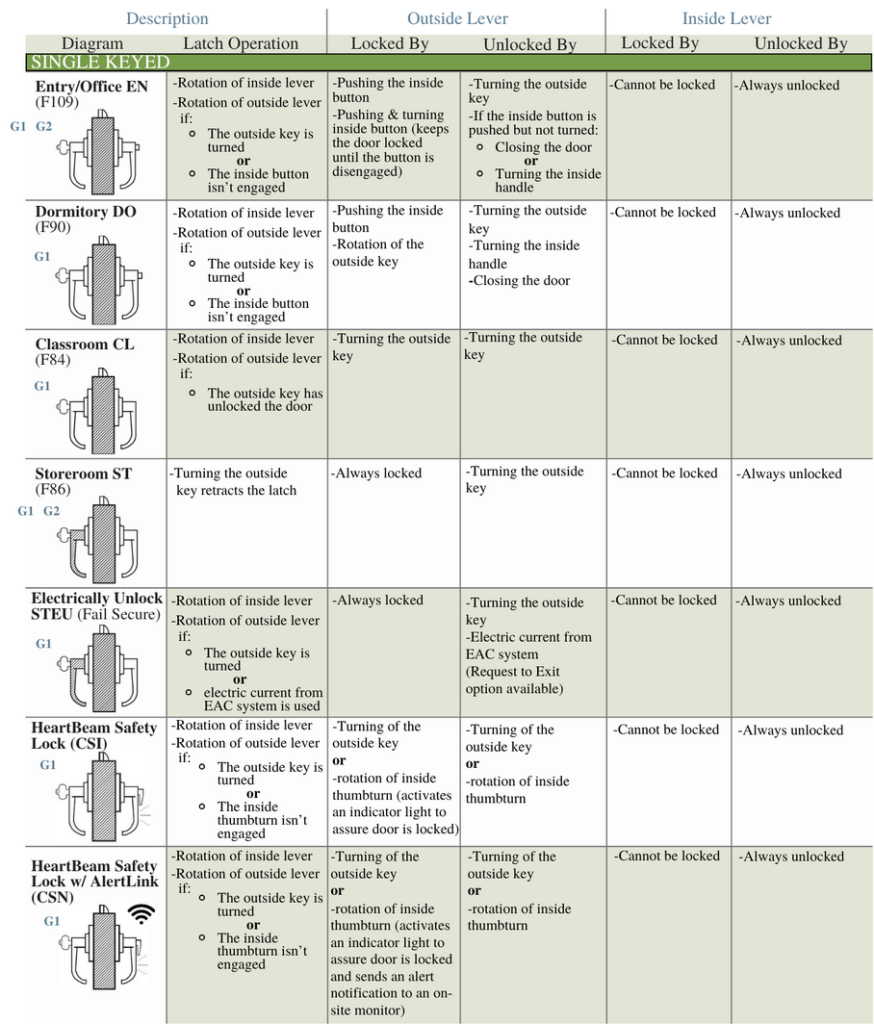
Here is a helpful chart of common functions Oak offers that highlights these differences:
Lockset Function vs. Lock Style: What’s the Difference?
It is common to confuse lock set function with lock style, but they refer to completely different aspects of door hardware:
- Lockset Style (Form): Refers to the physical design, aesthetic, and mechanical trim of the hardware. Examples include cylindrical lever sets, tubular door knobs, mortise locksets, interconnected locks, or deadbolts. Style dictates how the hardware looks and mounts onto the door.
- Lockset Function (Operation): Refers strictly to how the internal latch mechanism and locking components operate. Examples include passage, privacy, entry, classroom, and storeroom functions.
In short, the style is what the lock looks like, while the function is how the lock works. A single lever style can often be ordered across multiple functions depending on the needs of each doorway.
Common Lockset Functions and Where to Use Them
Of the various locksets available, there are a few that are most commonplace. An understanding of each can help you plan how traffic flows through your building and where access can and should be restricted. Here are a few of those functions.
Passage Function
A passage lock function has no keyed access because there is no way to lock the door. The door is always unlocked and can be opened simply by rotating the lever. The value these locks bring is to offer privacy while allowing for easy access in and out. A doctor’s exam room is an example where privacy should be offered, but security isn’t needed.
Privacy Function
A privacy option looks very similar to a passage lock but offers a locking mechanism. Usually an inside push button, the door can be locked without a key. The door can be unlocked without a key by turning the inside handle or through an emergency release on the outside handle. These locks are often used for bathroom doors and similar entries where someone may need privacy from casual access, but easily bypassed in the case of an emergency. Bathroom doors often use this function.
Entry/Office Function
Entry and office functions refer to the same type of lock. These operate just the way a privacy lock does, but with a key used to unlock or lock the door from the outside instead of an emergency release. This prevents the door from easily being picked by an unauthorized person. Because of the privacy and increased security of the lock, they are often used for office or exterior entryways, as the name would suggest.
Storeroom Function
A storeroom function adds even more security than an entry function. Instead of the default being unlocked, the lock remains locked at all times. The door can only be opened by using a key on the outside of the lock. However, the door remains locked after the key is removed. IT closets, server rooms, and other high-security rooms benefit from using a storeroom function lock.
Classroom Function
The classroom function also has just one key on the outside of the door. However, the door can be locked or unlocked using the key. This works great for classrooms, as it allows teachers to lock or unlock their classroom as necessary while still providing single-motion egress for fires.
As a side note, we recommend a Heartbeam lock for classroom settings, as it allows a door to be locked from inside with a thumbturn and lights up to confirm the door is locked during a lockdown.
Dormitory Function
The dormitory combines the privacy and classroom security functions. The inside lever has a privacy button, with the outside being able to lock or unlock with a key. This allows for easily being able to change the status of the door with either the privacy of the button or a key. The versatility of the lock makes it a great option for student housing, as it grants privacy and security to a select number of users.
How to Choose the Right Lockset Function
With so many lock functions, it can be difficult to decide which lock or combination of lock functions is the best fit for you. Our team of OAK territory managers can assist and advise you on what may work best. Here are a few things to consider.
Identify the Door’s Purpose and Who Needs Access
Instead of starting with the features of any particular lock function, it is much easier to evaluate the doorway. Who needs to access the door? How many people? Is the door providing security, privacy, or something else? These types of questions will help root out functions that simply can’t be used to achieve what you need it to.
Consider Privacy, Security, and Daily Use
There are different ways lock functions provide privacy and security. Who needs to be able to control the privacy and security of a doorway? How often does the door need to be locked and unlocked? How critical is the need for privacy or security? Are there other doors the user must first enter through that take care of the need for privacy and security? How often will this door be used? For instance, placing an entry function lock at the entrance of a building may mean that the need for security throughout the building is decreased.
Check Egress, Accessibility, and Applicable Code Requirements
Fire safety and other codes should govern our decisions when it comes to functions. Most schools require single-motion egress. The Americans with Disabilities Act has requirements on how a door can be locked or unlocked. Make sure to review these before making any decisions.
And as always, our team is here to help. If you feel at a loss for which lock function you need, you can find us at 317-585-9830.