
The locks on your doors wear out over time. Residue and lint from keys can gum up keyways, return springs can wear, and finishes lose their luster. However, there are small, practical workflows you can take to extend the life of these locks.
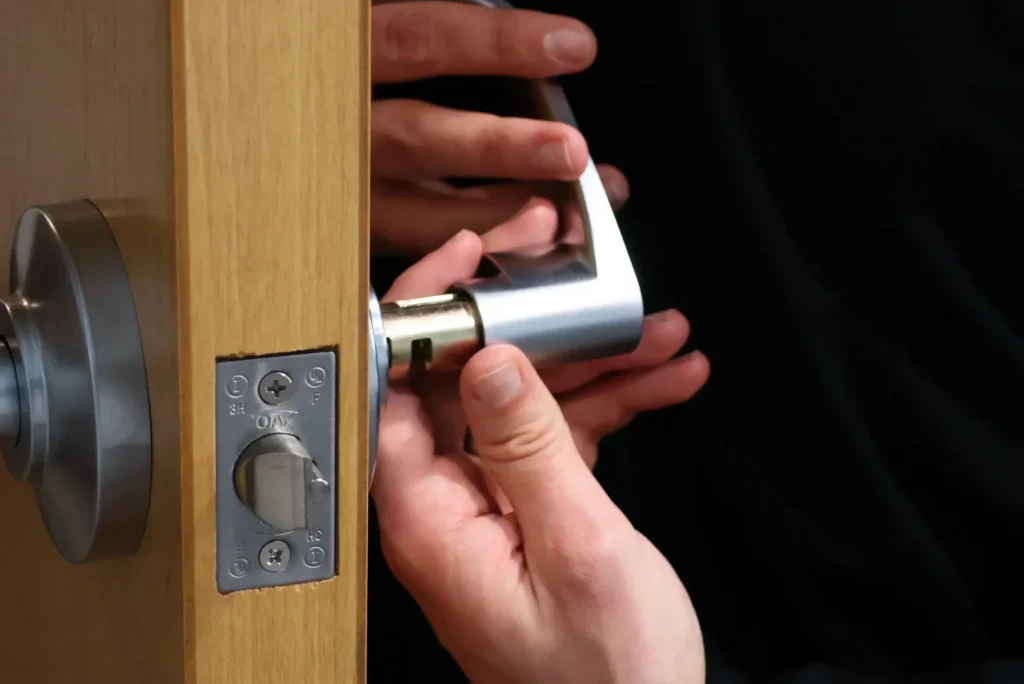
Commercial door lock maintenance starts with inspecting the entire opening and proactively addressing issues before they compromise the lock. Cleaning and lubrication can help when they address the actual problem, but they cannot correct a sagging door or replace worn parts.
For facility managers, a consistent routine helps catch problems before they interrupt access or create an urgent service call. This guide covers hardware identification, inspection, cleaning, lubricant selection, troubleshooting, and maintenance records. It also explains when to stop adjusting a lock and ask for help.
1. Identify Your Hardware Before Starting
Start with what is installed. A cylindrical lock has its mechanism in a chassis fitted through a bored opening. A mortise lock has a case fitted into a pocket in the door’s edge. Our guide to mortise and cylindrical locks explains their construction.
A deadbolt is a separate locking bolt. An interchangeable core is a removable, keyed component within compatible hardware, not a complete lockset. Your inventory may need to identify both the lock body and its core.
Record the manufacturer, model, function, and finish. Function describes how the lock controls entry and exit. Locate the instructions for the actual product; a document for a similar-looking lever may not apply.
Keep the cylinder, internal mechanism, and exterior finish separate in your maintenance plan. Each can require different treatment.
Before beginning:
- Identify the door by location or asset number.
- Confirm the product instructions and approved cleaning or lubrication supplies.
- Arrange access for inspection without leaving the opening unsecured.
2. Inspect the Lock and the Door Around It
Look for loose trim, damaged handles, corrosion, missing fasteners, and bent or visibly worn keys. Operate the hardware gently. Check that the lever returns as intended, the key operates smoothly, and the latch engages when the door closes.
Inspect hinges, the frame, and the strike: the plate that receives the latch or bolt. Look for rubbing, sagging, and unusual gaps. Where a closer is installed, observe whether it brings the door fully closed.
A door whose key turns easily when the door is open but binds when it is closed suggests pressure or misalignment at the opening. It is a clue to investigate the door, strike, and hardware mounting before assuming the cylinder needs lubricant.
Avoid forcing the key or repeatedly slamming the door. Record what changes between open and closed operation.
Maintenance also affects usability. The U.S. Access Board’s guide to accessible door hardware explains one-hand operation without tight grasping, pinching, or wrist twisting for covered doors. A lever that becomes difficult to operate deserves attention even if it still locks.
3. Clean Commercial Lock Hardware Properly
For exterior surfaces, use a soft cloth and the cleaning method approved for the specific finish. Do not assume metal polish, an abrasive pad, or a strong cleaner is appropriate because the hardware looks metallic. A protective finish may require different care from the material underneath.
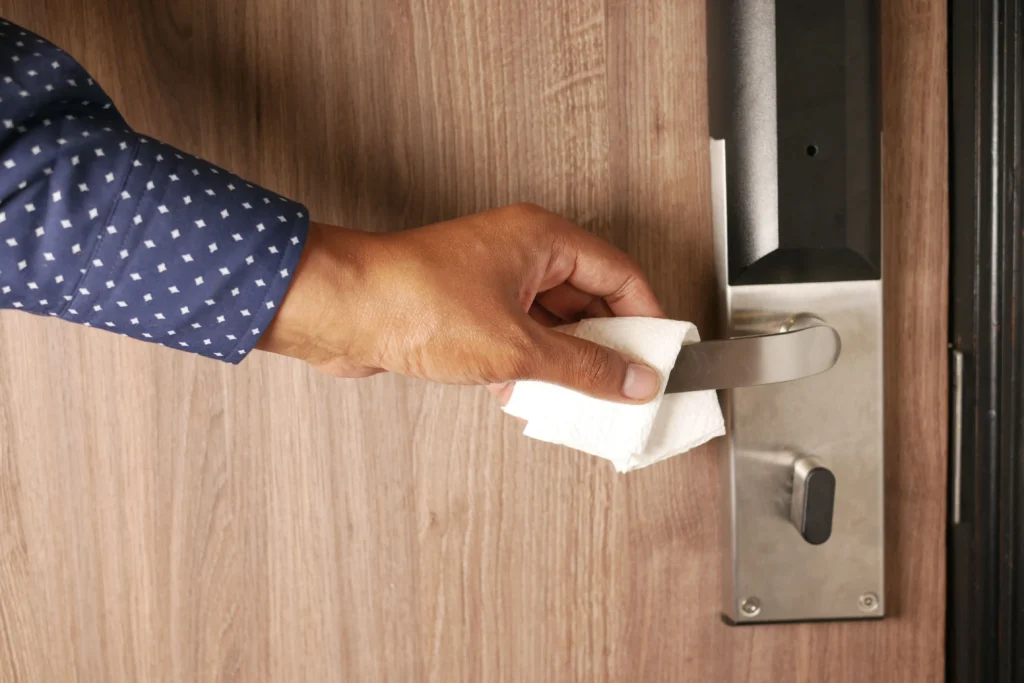
Control the amount of liquid and keep cleaning products out of the keyway, seams, and internal mechanism. Follow instructions about application, rinsing, and drying. Surface cleaning should remove dirt without flooding the lock.
Internal contamination is a different service task. If the cylinder feels gritty or remains difficult to operate after approved routine care, describe the condition to your Oak Security Territory Manager. Do not flush the mechanism with a general-purpose cleaner.
Healthcare facilities should follow their own infection-control procedures. CDC’s core practices for healthcare cleaning and disinfection emphasize product instructions, contact time, and material compatibility. Confirm that the disinfectant and application method suit the hardware.
4. Choose the Right Door Lock Lubricant
The best lubricant for door locks is the one specified or approved for that manufacturer, model, and component. If the instructions do not identify one, we recommend a dry lubricant for cores, such as a silicone-based Lab Lube. Avoid water-based propellants, as water can attract dirt and lint.
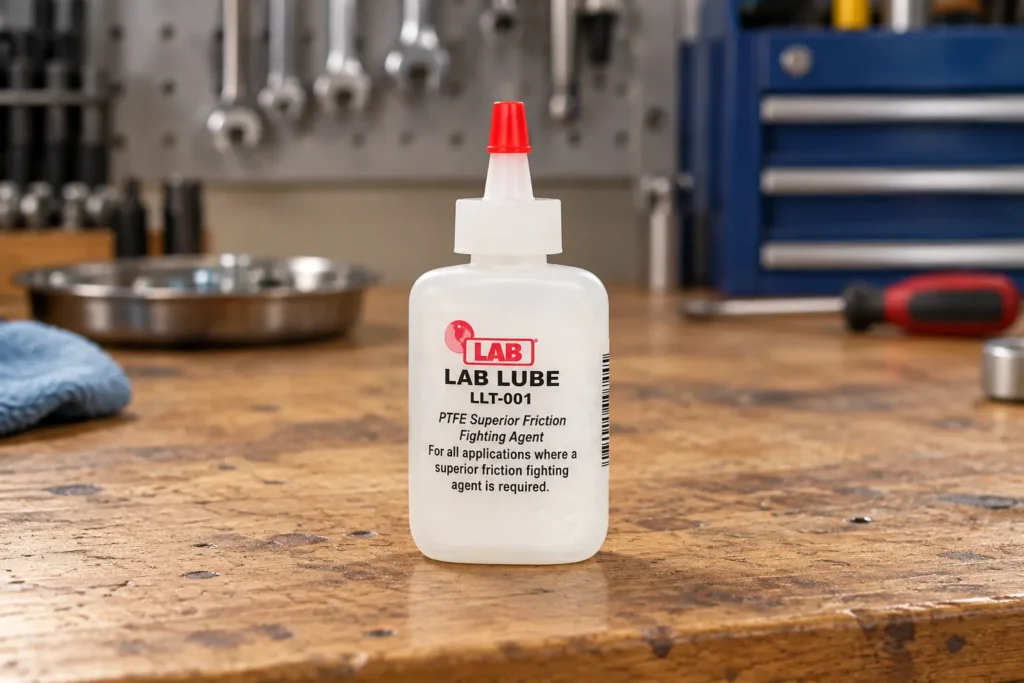
When lubricating door locks, follow the specified amount, application location, and method. Apply only where authorized, then operate and retest the hardware as directed..
Avoid mixing lubricants unless the manufacturer specifically permits it. Repeatedly adding more lubricant to a persistent problem can delay diagnosis of misalignment, contamination, or worn components.
Internal disassembly and servicing should be handled by someone qualified for that hardware. This is particularly important when work involves a fire-rated opening, exit hardware, or electronic components. Routine care should end where the product instructions or your team’s training end.
5. Recognize Problems That Need More Than Maintenance
A symptom helps narrow the investigation, but it is not a diagnosis. Use these checks to describe the problem and decide when professional service is needed.
| Symptom | What to check and when to get help |
|---|---|
| Key is difficult to insert or turn | Check for key damage and compare operation with the door open and closed. Have persistent cylinder trouble assessed; do not force the key. |
| Lever is loose or fails to return | Check mounting condition against the instructions. Continued looseness or poor return can require mechanism service or replacement. |
| Door does not latch consistently | Check alignment, strike position, and closing action. Have the whole opening assessed rather than modifying the strike by guesswork. |
| Problem returns after cleaning or lubrication | Record what was applied and how long improvement lasted. Arrange professional diagnosis instead of repeating the treatment. |
| Hardware is damaged or access is unreliable | Arrange prompt assessment for repair or replacement. If safe exit operation is affected, activate your facility’s immediate response procedures. |
Contact OAK when approved care does not restore dependable operation, when damage is visible, or when the team cannot identify the correct service method. Share the door location, hardware details, photos, and any difference between open and closed operation.
Treat problems affecting emergency exit operation or fire-door performance as urgent. The Occupational Safety and Health Administration’s exit-route maintenance requirements require applicable workplace exit routes to remain unobstructed and emergency safeguards to stay operational. Escalate through your facility’s safety procedures rather than waiting for the next routine visit.
6. Build a Maintenance Schedule Around Your Facility
Start with the manufacturer’s inspection and service guidance. Adjust routine checks for door traffic, weather exposure, dust, frequent cleaning, and previous problems. A busy entrance and a seldom-used interior storage door need different attention. Include gate and service-area padlocks in the inventory so padlock maintenance does not fall between teams.

Give heavily used entrances, exterior doors, and dusty service areas closer review. As a planning example, your team might add a brief operational check of a problem entrance to its regular rounds while a technician resolves the cause.
Assign both an inspection owner and someone responsible for closing follow-up work orders. A recorded problem is still a problem until the opening is retested and the corrective work is confirmed.
Keep a simple commercial lock inspection checklist and log:
- Door location, hardware manufacturer and model, inspection date, and inspector.
- Condition observed, action taken, and any approved cleaner or lubricant used.
- Service owner, completion and retest results, and next review date.
Track recurring symptoms by door.
Keep required fire-door inspections in the compliance schedule as well. The National Fire Protection Association’s (NFPA) swinging fire-door inspection checklist illustrates checking the whole assembly and its closing and latching operation.
7. Common Commercial Lock Maintenance Questions
How often should commercial locks be inspected?
Use the manufacturer’s guidance as your starting point, then account for use, environment, and service history. Check reported symptoms promptly instead of waiting for the scheduled date.
Can I use WD-40 or graphite in my lock?
WD-40 may be one of the worst lubricants to use on a lock or interchangeable core. The strong solvents can strip any existing lubricants from the lock; the oils attract dust that can gum up the lock; it dries into a gritty substance that prevents smooth operation; and the water residue from aerosol cans will create environments where rust can appear.
Why does my key work with the door open but bind when it is closed?
The closed door may put pressure on the latch or bolt because of alignment, strike position, or another opening condition. Have those checked before treating the cylinder. Stop forcing the key and record when the binding occurs.
When should a commercial lock be repaired instead of replaced?
Repair may make sense when the cause is identifiable, suitable parts are available, and service can restore reliable operation. Replacement may be appropriate for significant damage, repeated failures, unavailable parts, or hardware that no longer suits the opening. Evaluate compatibility, function, and your key system before ordering.
Make Lock Maintenance Part of Your Facility Routine
A useful routine is straightforward: identify the hardware, inspect the opening, clean it correctly, follow its lubrication guidance, and document the results. When a problem persists, arrange diagnosis and verify the repair.
At Oak, we help facilities with hardware and key-system decisions. Our cores and keys resources can help you consider the keying side of a repair or replacement.
Not sure what maintenance your locks need? Contact Oak Security Group with your hardware details and the symptoms you are seeing. Our team can help you determine the next step.