
Picking the right key cutting machine is a big decision. Not only are they an investment, but they are the tool you’ll rely on for urgent key replacements or large rekey projects. This guide looks at the four main types of machines to help you choose the best one for you.
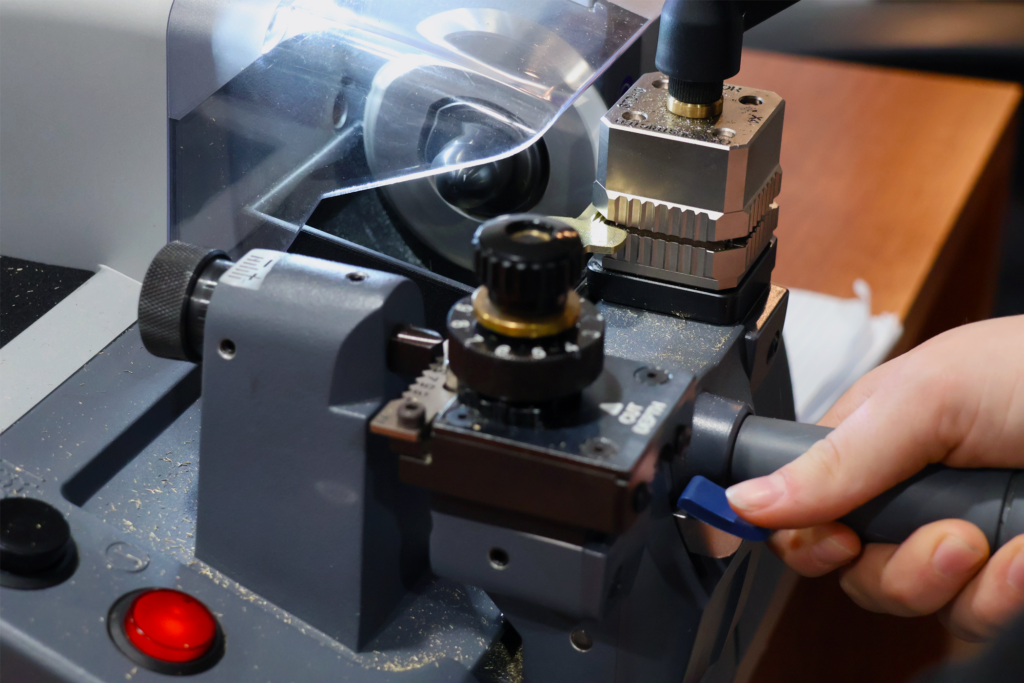
Choosing a key cutter means choosing whether you need to duplicate keys or cut from code, what type of cutting mechanism you require, whether the machine needs to be automated, and how many systems you need it to manage. Not sure? We’ll dive into each.
Category 1: Code Cutters vs. Tracer Duplicators
Code cutters and duplicators are both abundant in the marketplace. While key machines that cut keys from code produce a better-functioning key, tracers are better for those who may not have access to codes, such as a commercial locksmith. Which one you move forward with depends on your goal and what you can reasonably access for your key-cutting purposes.
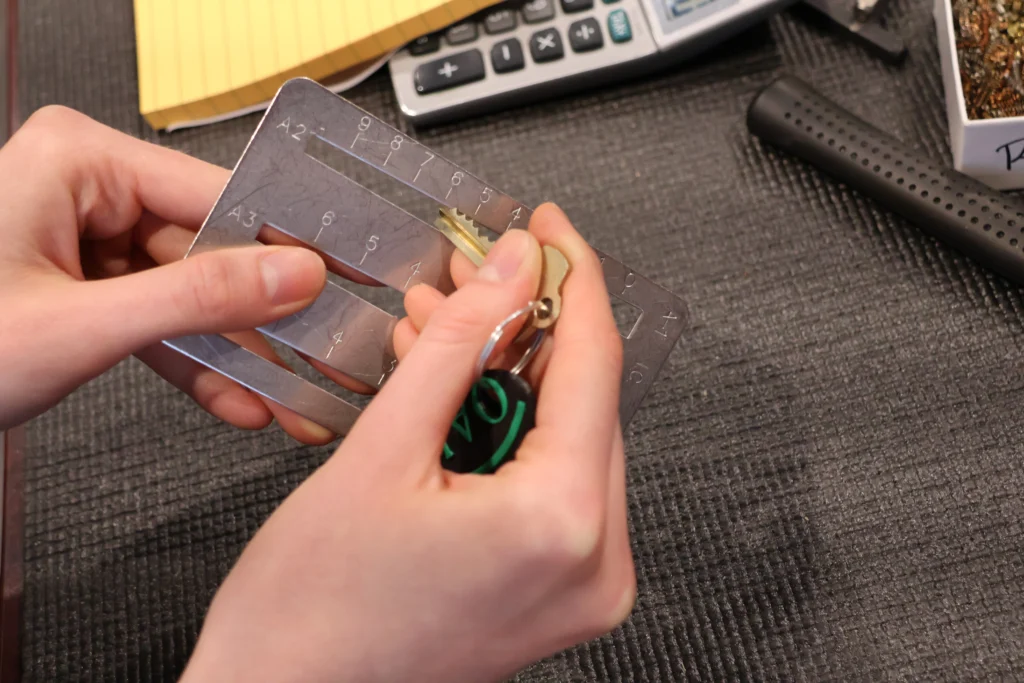
How a Tracer-Based Key Copy Machine Traces Existing Keys
A machine that copies keys by tracing is exactly as it sounds. While the process varies between brands, the key being duplicated is clamped next to a tracer or guide while the new key is placed by a cutting wheel. As the cuts from the original key are traced, the cutting wheel cuts similar cuts into the new key.
Cutting From Code: Originating Factory-Fresh Keys
Cutting from code means that the machine operator has obtained the “key codes” that tell how deep to cut the key. As long as your key machine is correctly calibrated, cutting keys from code means that you are producing a “factory-fresh” key. These keys do not display the wear that an old key might and typically perform better.
When to Use a Tracer vs. a Code Machine for Key Copying
Tracers are ideal when a copied key is needed, but key codes that display how deep to cut the key are not available. While it may seem easier to trace an existing key, this really only works if the original key is in working order. If the old key is worn and doesn’t work correctly in a lock, a key tracing machine will simply duplicate the same problems. Even with a working original key, tracers are seldom perfect and may still have slight issues.
Even still, keys can take a great deal of time to wear out. If you are a locksmith who does not have access to the key codes, a tracer is ideal. If your key is functioning well, and you simply need a copy to distribute to someone else, a tracer is an easy tool to use without having to learn cut position and cut depth codes.
Category 2: Cutting Mechanism – Wheel Grinder, Laser End-Mill, and Punch Machines
There are 3 standard cutting mechanisms that most key cutters have. The choice of cutting mechanism greatly depends on the type of key you are cutting. All mechanisms can cut well, but certain keys may require a more specialized machine.
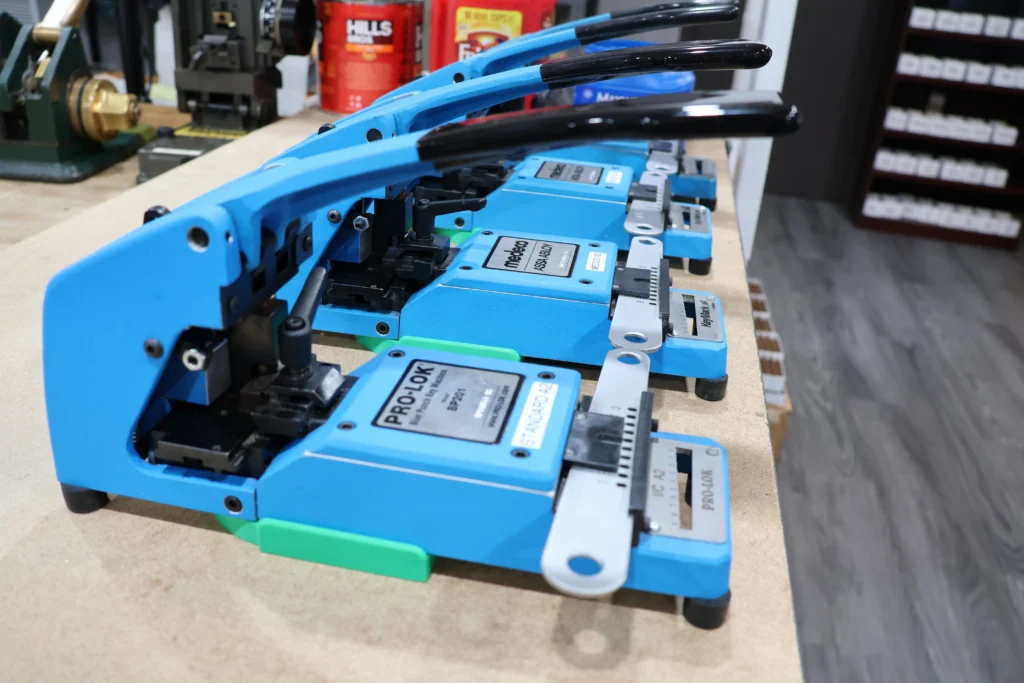
Rotary Wheel Cutters: The Classic Key Grinding Machine
Rotary wheels are synonymous with what some refer to as a “grinder.” The cutting wheel spins at a high speed while the wheel’s teeth cut into the key to the correct depth. The simplicity of the design makes for a rugged machine, yet many rotary wheels are limited in the types of keys they can cut.
Laser Cutters: Precision Milling for High-Security Sidewinder Keys
Laser cutting machines are a misnomer in the key-cutting world. “Laser” typically refers to high precision instead. This is where end-mill cutters thrive. The small cylinder cutter is typically moved across on a programmed path that allows one to cut more complex keys that may have dimples, unique angles, or other high-security features. However, it’s important to note that these machines are usually very expensive and complex, requiring the user to learn and understand the machine’s software.
Punch Machines: Fast, Clean Cuts Without Electricity
Punch machines are a fast and simple cutter. By simply pulling the handle, a user can punch out each individual cut on a key. These machines are typically portable and don’t require electricity. For some, the repeated punching motion of the lever can cause stress to joints. Most of these machines are also limited to a certain manufacturer or key design.
Which Cutting Mechanism Fits Your Workflow?
Do you have access to electricity where you cut your keys? Is it acceptable that your machine is loud? What types of keys and how many do you plan on cutting? All are important questions when considering your cutter type, with the most important being whether the cutter is well-suited to cut the keys you use.
Category 3: Automation Level – Automatic Key Cutter vs. Manual Key Cutting Machine
Whether you prefer to have an automatic or manual machine is a matter of preference. The number of keys you cut may warrant an automatic key cutter. However, portability and electrical access remain considerations.
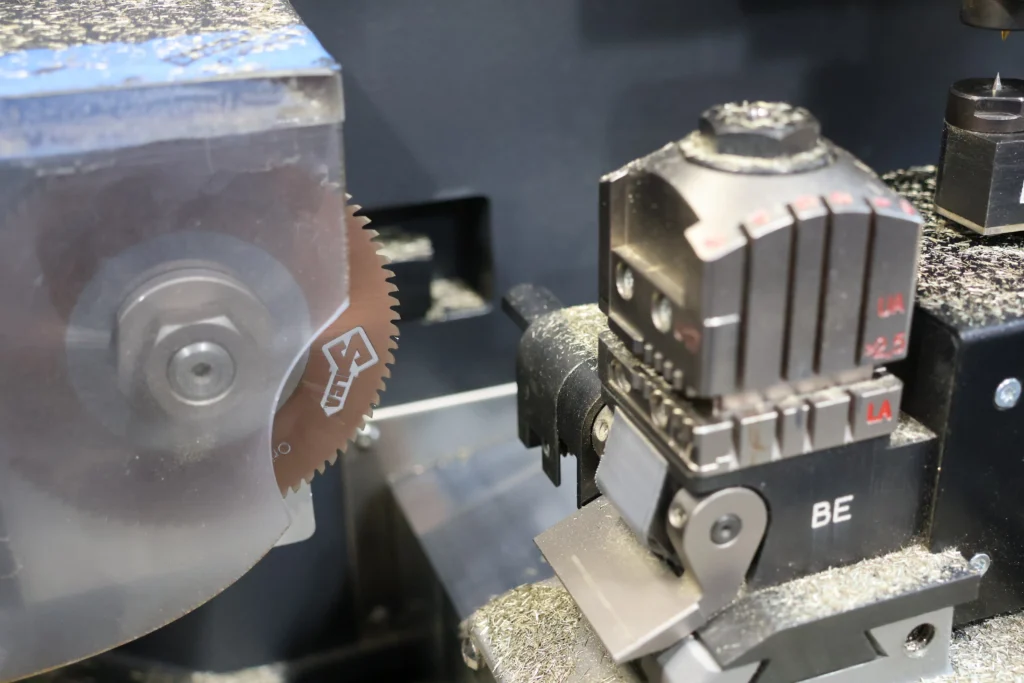
The Manual Key Cutting Machine: Hands-On Control and Repairability
The choice to use a manual key cutter may feel like purely a financial one. However, there are reasons a manual key cutter is ideal. For instance, these machines are more easily self-servicable. If downtime is an issue, it is helpful to at least have a manual key cutter as a backup. The lack of software means that the control and feedback of the key is entirely in your control as well. For automated machines, you may not recognize an issue with the keys produced until you are examining your finished batch.
The Automatic Key Cutter: Push-Button Precision and High Volume
If volume is the concern, automated key cutters deliver. The work for these machines is usually frontloaded in the setup and allows you to continue on with your day while the machine produces your key. If you yourself do not have previous experience cutting keys, the precision of an automated cutter delivers the expertise for you.
Category 4: Single-System vs. Multi-Format Key Machines
A final category to consider is single-system or a multi-format key cutter. This is exactly what it sounds like. Most key cutters, especially manual cutters, cut to a specific key system. A Medeco key cutter will only cut Medeco keys, for example. If you have an A2 and an A4 key system, you will also likely need to get separate cutters for each system as well, even if the keys are the same. The alternative is to invest in an automated or milling key machine.
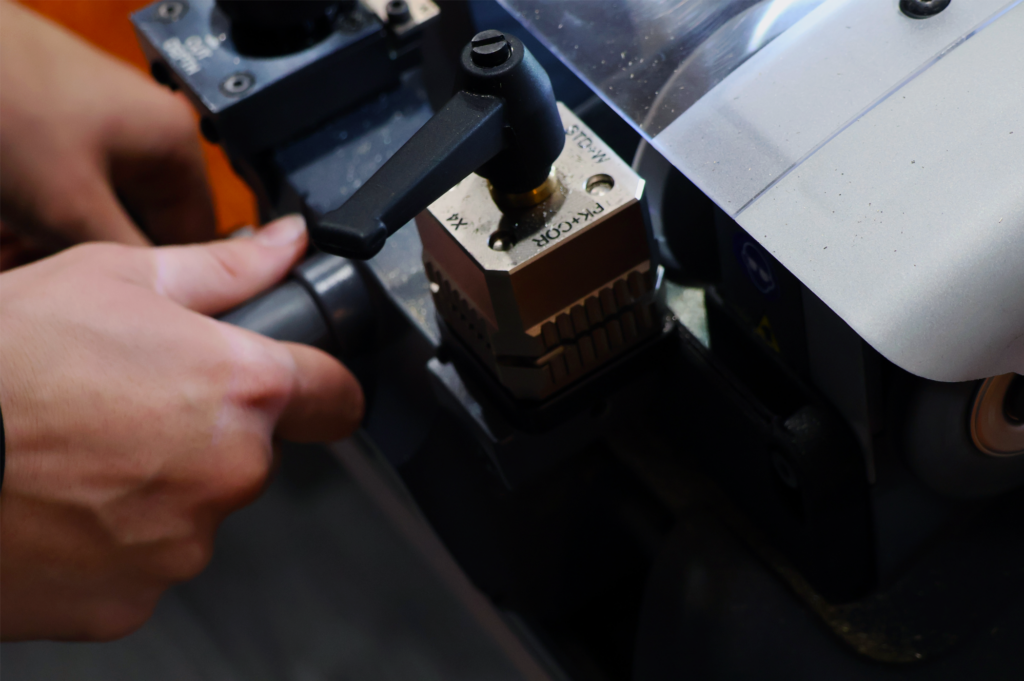
However, Oak Security has worked to provide an option for those who don’t want a bulky milling machine, but have multiple keys or key systems. The Oak Key Cutter is able to cut standard, DKB Cormax, Medeco X4, OakPlus, DKB Peaks, and industry premium “W” series keys through a rotating key clamp. The machine is also able to adjust for cutting A2 or A4 key systems should your facilities have a combination of the above keys and systems.
Choosing the Right Professional Key Cutting Machine for You
The right key cutting machine doesn’t start with the machine’s features, but with what your requirements are in order to complete the work you do. Restrictions like time, budget, learning curve, and others we’ve discussed should be weighed against each other to determine what’s important to you. The recommendations below are not hard-set truths, but rather recommendations painted in broad strokes based on our 20 years of experience.
Best Setup for Hardware Stores and Locksmiths
For hardware stores and locksmiths, key tracing machines are likely the most ideal. Without access to key codes, most of the requests you receive will be for keys that need to be copied. If you often receive large jobs, an automated key cutting machine may prove useful as well. These will save your joints, free up your time while the machine cuts, and offer solutions for a wide variety of key systems. A manual key cutter like the Oak Key Cutter may prove to be a helpful backup in case your machine goes down, but is not necessary if most jobs aren’t urgent.
Best Setup for Facilities Managers
Facilities managers are likely working with the same key system(s) over time, are working on small to mid-sized projects, and may be limited in their budget. For most facilities managers, we would recommend a manual key cutting machine. Most managers have access to their codes or know who does, and a cut-from-code machine will produce keys that will last for a longer time than a traced key copy.
However, manual machines can cause bodily strain and are limited to one system. That’s why we would recommend the Oak Key Machine, with a low-impact cutting wheel that cuts from code. The machine also supports multiple systems should your facility use multiple systems or want to eventually rekey over time.
If you are interested in hearing our personal recommendations based on your current circumstances, our team is ready to provide free recommendations! Give us a call at 317-585-9830, and we’d love to help.